


Modernize your PK workflows with standardized, submission-ready datasets
When regulatory deadlines loom, delays in pharmacokinetic (PK) data preparation can derail timelines and erode valuable patent life. While non-compartmental analysis (NCA) remains efficient, the datasets supporting these analyses are often fragmented, inconsistently structured, and increasingly complex.
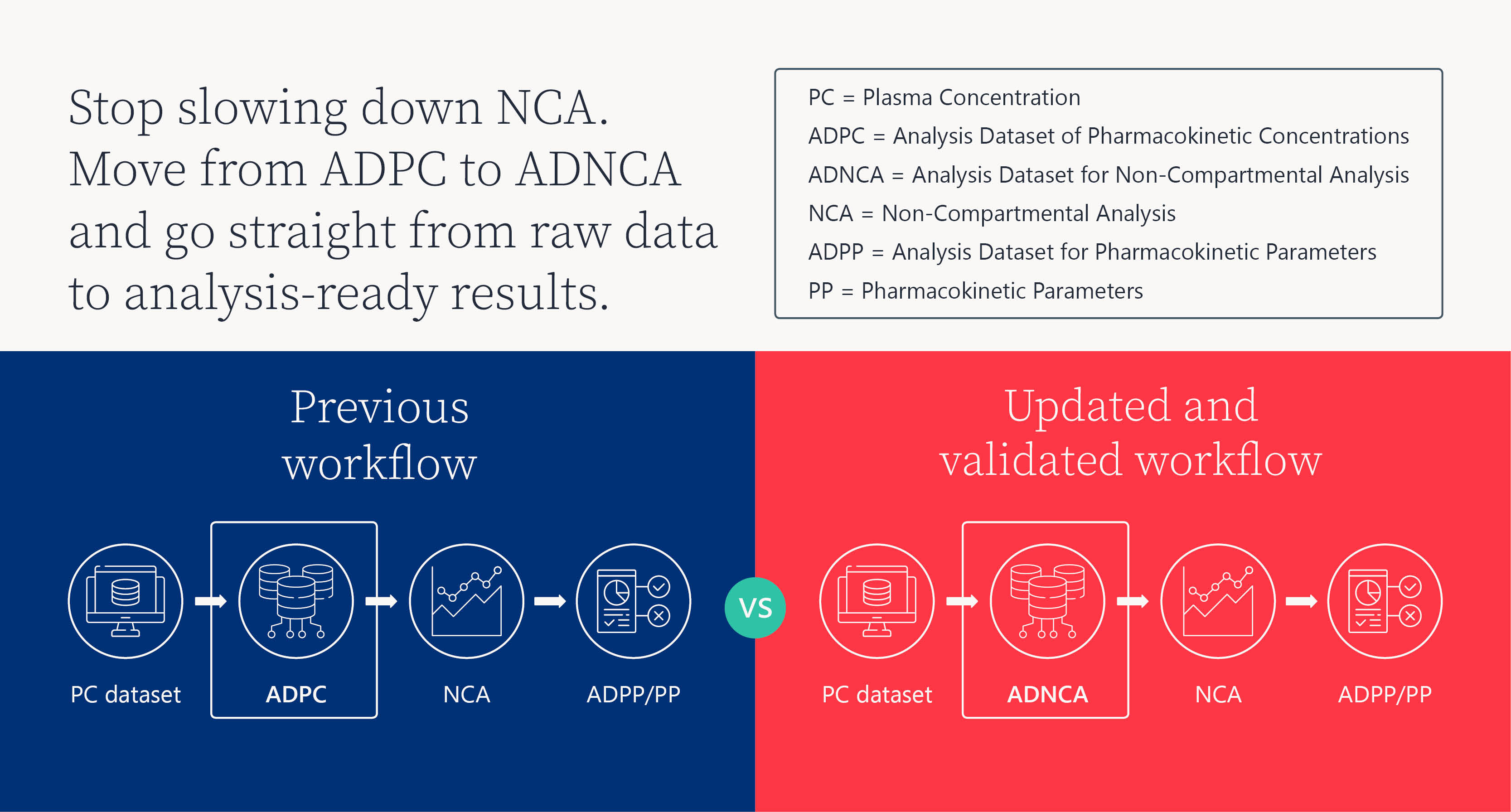
Non-standard PK concentration datasets (commonly referred to as ADPC) lack CDISC standardization and frequently require manual formatting, reconciliation, and rework, leading to avoidable delays and regulatory queries.
The Analysis Dataset for Non-Compartmental Analysis (ADNCA) is the CDISC ADaM standard designed for NCA. Built on the ADaM Basic Data Structure (BDS), it integrates dosing, timing, and exclusion variables into a consistent, traceable, formatenabling streamlined workflows from data collection through analysis and submission.
By standardizing NCA input data, ADNCA improves traceability, reduces rework, and supports seamless use with tools such as Phoenix WinNonlin®. It provides a submission-ready structure that enables regulators to efficiently review and reproduce results using familiar processes.
What you’ll learn
- Build regulatory confidence by aligning with FDA, PMDA, and CDISC expectations using the ADNCA standard for NCA input datasets
- Replace legacy, non-standard PK concentration datasets with a validated ADNCA structure that supports both concentration data and derived PK parameter analysis within a single framework
- Integrate seamlessly with industry-standard tools such as Phoenix WinNonlin, using ADNCA as an analysis-ready dataset compatible with validated workflows (e.g., Pinnacle 21®) without additional transformation
Case Study Spotlight: Standardizing NCA with ADNCA in Action
One sponsor adopted ADNCA mid-development to replace non-standard PK datasets across multiple studies. By standardizing concentration, dosing, and timing data within a single structure, they reduced data preparation time, improved interim analysis turnaround, and achieved smoother regulatory submissions with fewer queries.
Direct compatibility with tools like Phoenix WinNonlin enabled automated, validated NCA workflows without additional data transformation.
Implementation Tips
- Start early: Define ADNCA at study setup
Establish ADNCA specifications early in study design, incorporating dosing, timing, and analysis variables alongside concentration data from SDTM and other ADaM datasets to avoid late-stage rework - Leverage templates: Automate ADNCA generation
Use validated templates and workflows in tools such as Phoenix WinNonlin to generate consistent, compliant NCA input datasets aligned with CDISC ADaM standards - Maintain a central metadata repository
Keep specifications and naming conventions aligned across studies and programs to ensure consistency and traceability - Validate continuously
Apply standard compliance tools such as Pinnacle 21 (P21) to validate ADNCA like any other ADaM dataset, identifying issues early and reducing submission risk
Why This Matters
Standardizing NCA input data with ADNCA eliminates reliance on non-standard formats and supports automated workflows from data collection through submission.
Aligned with CDISC standards and compatible with industry tools, ADNCA improves traceability, reduces risk, and enables faster, higher-quality regulatory submissions—an approach increasingly expected by global health authorities.
Streamline Your NCA Workflows
Simplify processes, strengthen compliance, and accelerate submissions with ADNCA. Download the guide!