




This case study features Applied BioMath’s* collaboration with Alexion Pharmaceuticals. Alexion Pharmaceuticals, Inc. is a biopharmaceutical company, focused on developing therapies for rare diseases.
Crigler-Najjar syndrome type 1 (CN1) is an an autosomal recessive disease caused by a marked decrease in uridine-diphosphateglucuronosyltransferase (UGT1A1) enzyme activity. Delivery of a modified messenger RNA encoding for UGT1A1 (hUGT1A1-modRNA) as a lipid nanoparticle (LNP) is anticipated to restore hepatic expression of UGT1A1, allowing normal glucuronidation and clearance of bilirubin in CN1 patients. In vivo mechanism of action and clinical pharmacology is unknown.
The goal of this collaboration was to develop a QSP model to support translation from preclinical to clinical studies, and first-in-human (FIH) studies and to use this QSP model to provide a deeper understanding of the mechanisms of hUGT1A1-modRNA and to guide design of the first-in-human clinical studies.
Model diagram & development
The QSP model was based on first principles as a system of elementary mass-action, mechanistic PKPD, ordinary differential equations.
The model reactions describe elimination of LNP from the plasma due to liposomal instability, uptake of LNP by endocytosis into liver hepatocytes, release of mRNA from the endosome into the cytoplasm, transcription of the mRNA to produce UGT1A1 protein, and glucuronidation of bilirubin by UGT1A1 leading to the increased clearance of bilirubin.
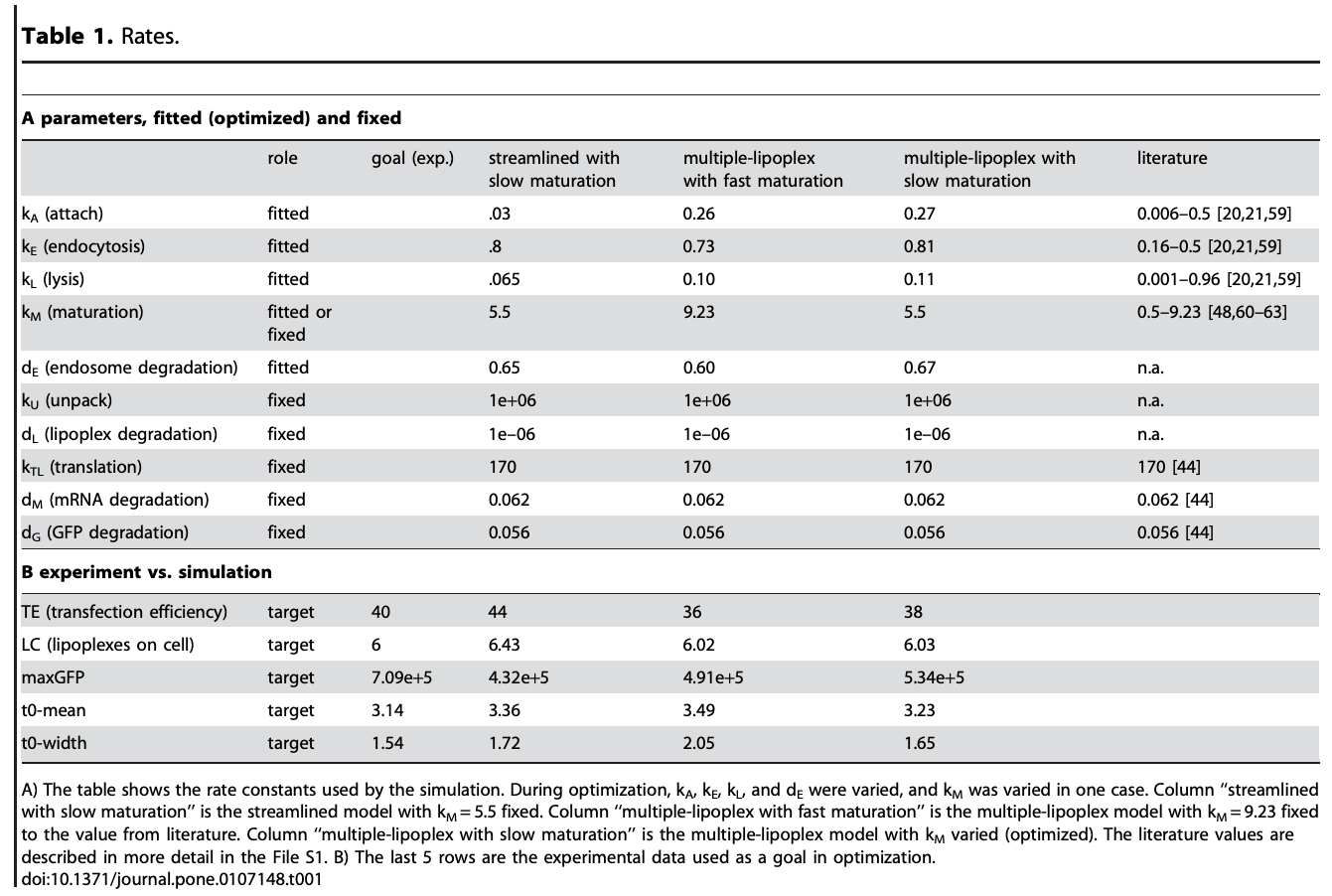
The QSP model was populated primarily with mechanistic parameters from literature, as shown here.
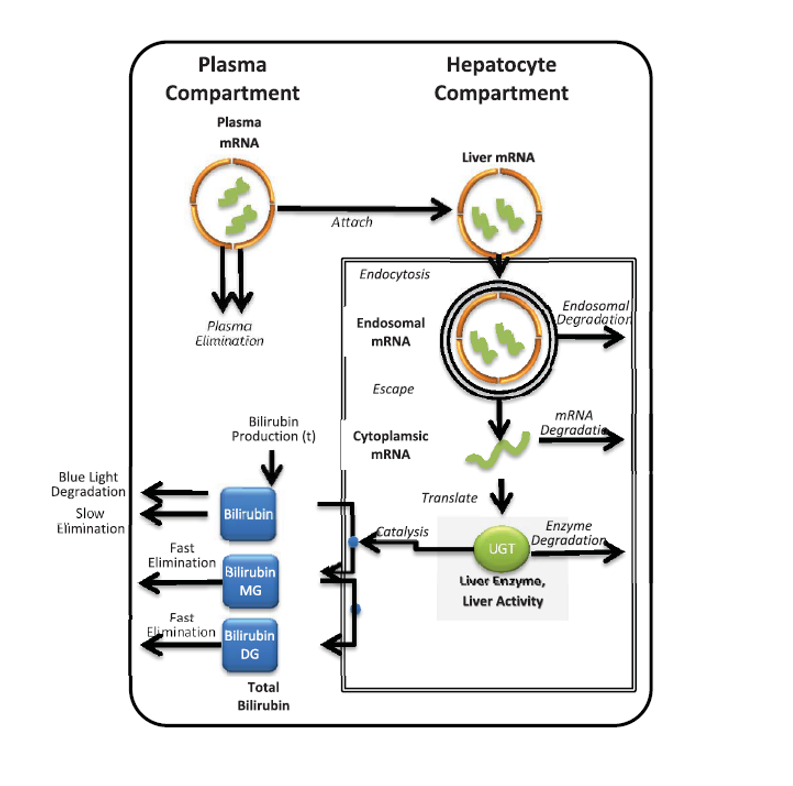
Plasma and tissue PK parameters
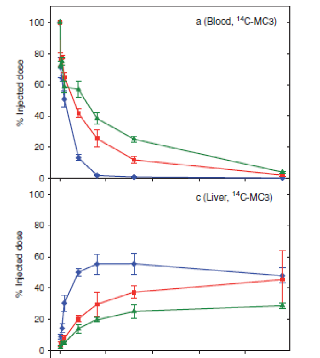
Mui, B. L. et al (2013). Influence of Polyethylene Glycol Lipid Desorption Rates on Pharmacokinetics and Pharmacodynamics of siRNA Lipid Nanoparticles. Molecular Therapy. Nucleic Acids, 2(October), e139.
Protein and mRNA turnover parameters
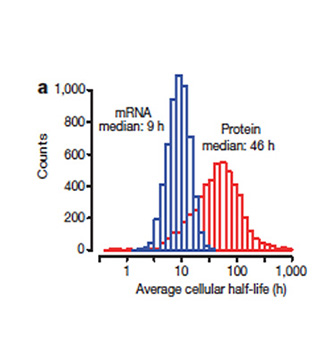
Schwanhäusser, B. et al (2011). Global quantification of mammalian gene expression control. Nature,473(7347), 337–42.
Protein and mRNA turnover parameters
Ligon, T. S. et al (2014). Multi-Level Kinetic Model of mRNA Delivery via Transfection of Lipoplexes. PLoSONE, 9(9), e107148.
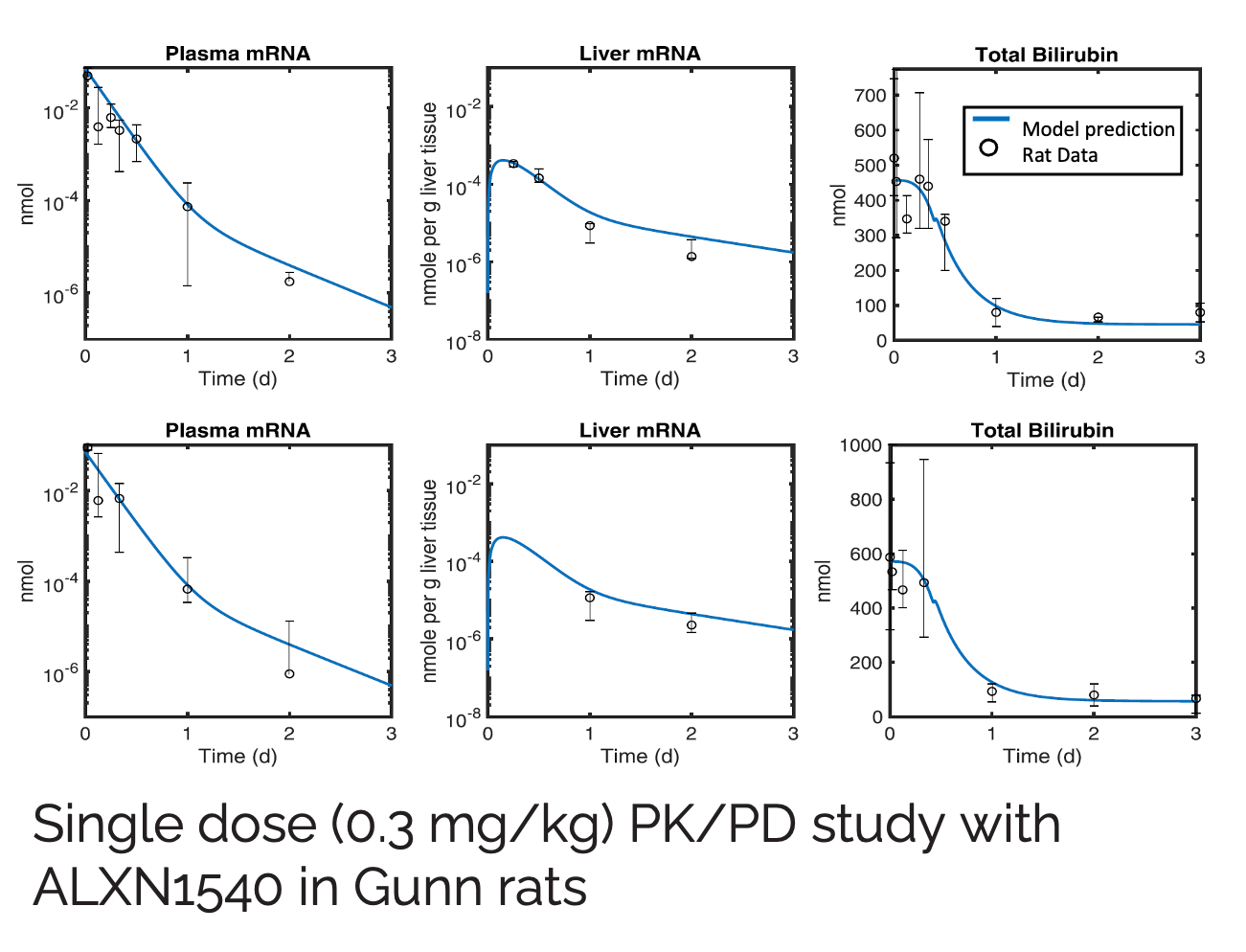
Model predictions match single dose rat data
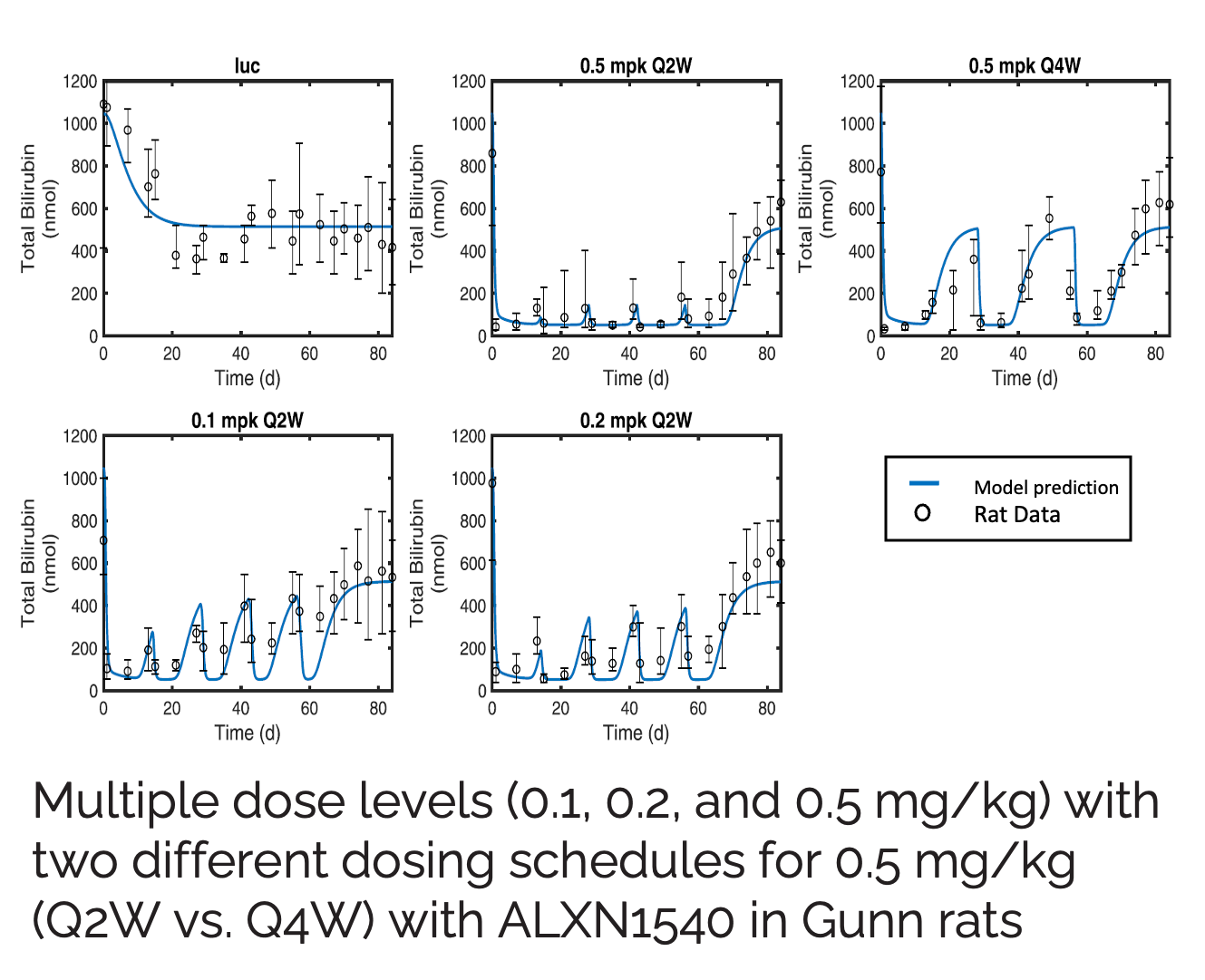
Model predictions match multidose rat data
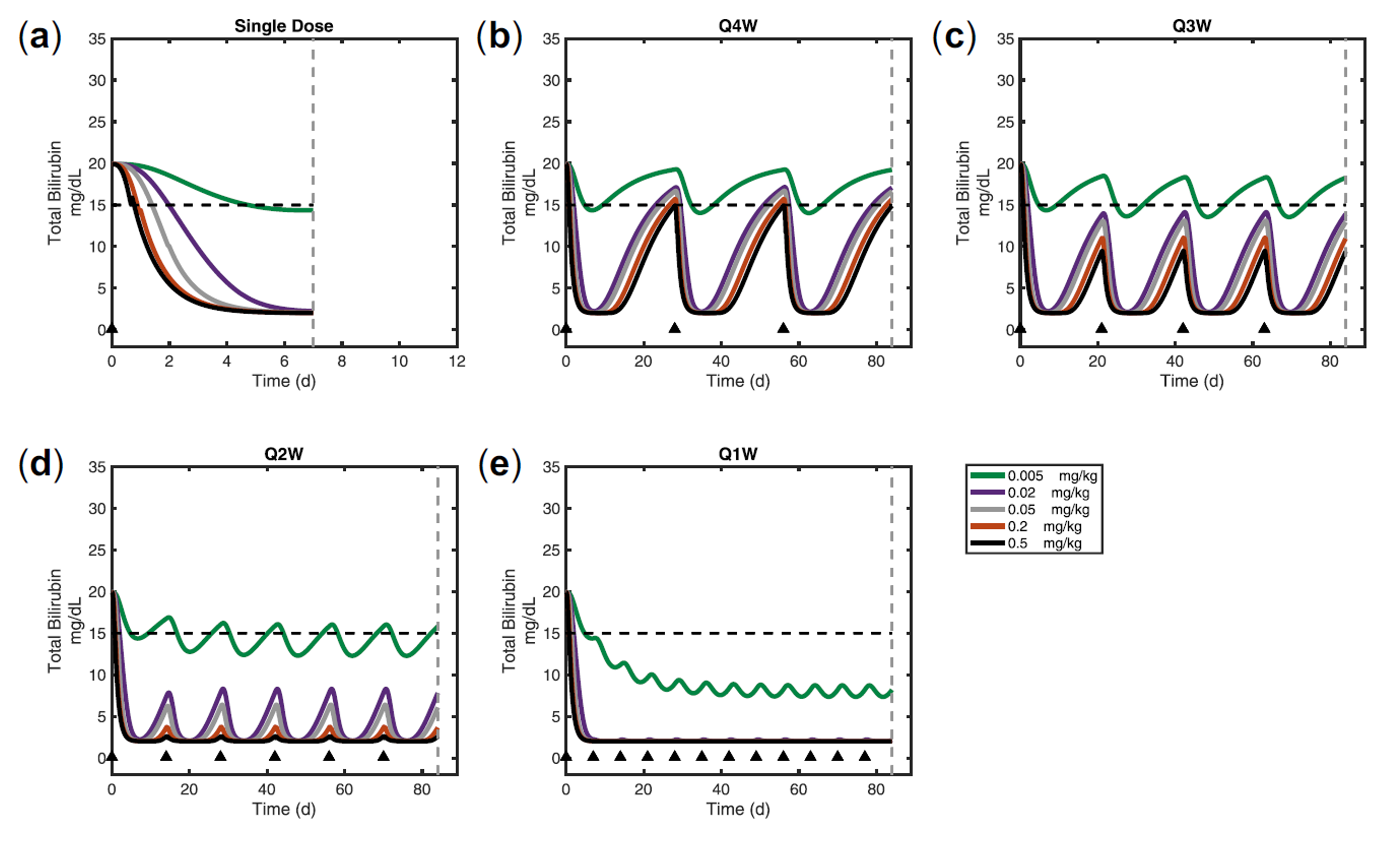
Model FIH predictions
FIH predictions of bilirubin lowering for a dose range of a single dose, or every 1, 2, 3, or 4 weekly doses of ALXN1540 (a, b, c, d, e, respectively).
Model predicted human dose response curve for steady-state, trough bilirubin levels for each dosing schedule.
Dose times are marked with a black triangle.
Time point for dose response value is denoted by the dashed lines in subplots a-e.
* Applied BioMath was acquired by Certara in Dec 2023.
与 QSP 专家建立联系
联系 Certara,探讨 QSP 服务如何加速您的药物研发项目我们的专家团队随时准备为您提供定制化解决方案。