


Sessions:
2026 年 9 月 1 日, 星期二 | 11am to noon ET
2026 年 9 月 3 日, 星期四 | 10am to 11am CEST (GMT+2)
2026 年 9 月 3 日, 星期四 | 10am to 11am JST (GMT+9)
概述
Every modeler has lost hours to the same tax: translating a modeling idea into working code before any science can happen. The syntax, the workflow sequence, the plumbing between tools — it all stands between you and the question you want to answer.
What if you could rely on the AI assistant you already use as a collaborator; one who speaks modeling’s most versatile language, knows the recommended NLME workflow, and accesses a robust, fast-converging engine for fit, diagnostics, and suggested next steps? That’s the MCP Server for Certara RsNLME. You describe the model in plain language. Your assistant translates it into ready-to-run, reproducible R code and executes it on the same Phoenix NLME engine and RsNLME toolset you already trust.
But faster “time to first model” is only half the story. Precision comes from how thoroughly you search the model space. That’s where pyDarwin’s machine-learning model search comes in. In a study on a published 17-DMAG population PK dataset, we compared a recoded literature model against both the MCP and pyDarwin approaches, all run under the same selection criteria in Certara NLME. Each of the automated approaches substantially outperformed the manually built model, achieving markedly lower −2LL and better QPC predictive-check scores. Combined, the MCP server and pyDarwin hold the potential to reach even better-fitting, more predictive models far faster than manual forward-addition/backward-elimination. Meanwhile, the pharmacometrician stays in control of the criteria, the diagnostics, and the final call.
Join our team of technologists and pharmacometricians on September 1. They’ll show you all this live, and close with the latest on our web-based and interactive model library, Model Designer, and a look at the Phoenix Cloud for pharmacometrics roadmap.
点击报名
Arjen Bos
Principal Product Manager, CertaraArjen is a product manager with more than 20 years of experience in the life sciences industry. He joined Certara two years ago and is involved with a variety of Phoenix Cloud modules.
James Craig, MS
Staff Software EngineerJames is a Staff Software Engineer with 15 years of experience developing scientific and pharmacometric software in highly collaborative, cross-functional environments. His expertise spans statistical computing, modeling workflows, and scientific application development, with deep experience in R, Shiny, Python, and domain-specific languages for nonlinear mixed-effects modeling, including PML for Phoenix NLME and NMTRAN for NONMEM. He also brings extensive experience in enterprise and cloud-native application development, including Java, JavaScript/TypeScript, React, databases, APIs, and containerized environments. Working at the intersection of pharmacometrics, software engineering, applied statistics, and machine learning, James develops technology that helps scientists build, execute, and advance complex modeling workflows. He has co-authored nine scientific publications in leading journals.
Mark Sale, MD
副总裁Mark has more than thirty years in population pharmacokinetic/ pharmacodynamics modeling in both academics and industry. In his current role as Vice President at Certara he is responsible for conducting and overseeing population pharmacokinetic/pharmacodynamic analyses and strategic consulting on drug development. Dr. Sale also contributes to the software development group at Certara, supporting development of artificial intelligence and machine learning systems in pharmacometrics.
Prior to this role, Dr. Sale was global director of Modeling and Simulation at GlaxoSmithKline and assistant professor of Medicine and Pharmacology at Georgetown, respectively. He also has faculty appointments at Indiana University School of Medicine and Mercer University School of Pharmacy and State University of New York at Buffalo.
Dr. Mark Sale completed his medical training at the Ohio State University, residency training in internal medicine at Indiana University and a fellowship in Clinical Pharmacology at Stanford.
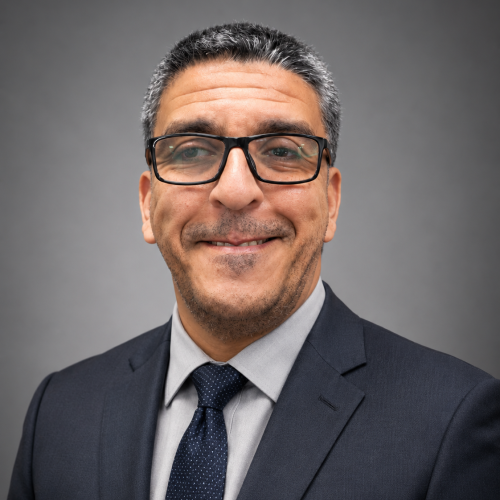
Samer Mouksassi, PharmD, PhD, FCP, FISoP
Senior Director, Application ScientistSamer has held several roles at Certara since 2007, helping biopharma clients apply model-based drug development across more than 100 studies and contributing to over 60 peer-reviewed publications in pharmacometrics.
点击报名