


2026 年 6 月 5 日
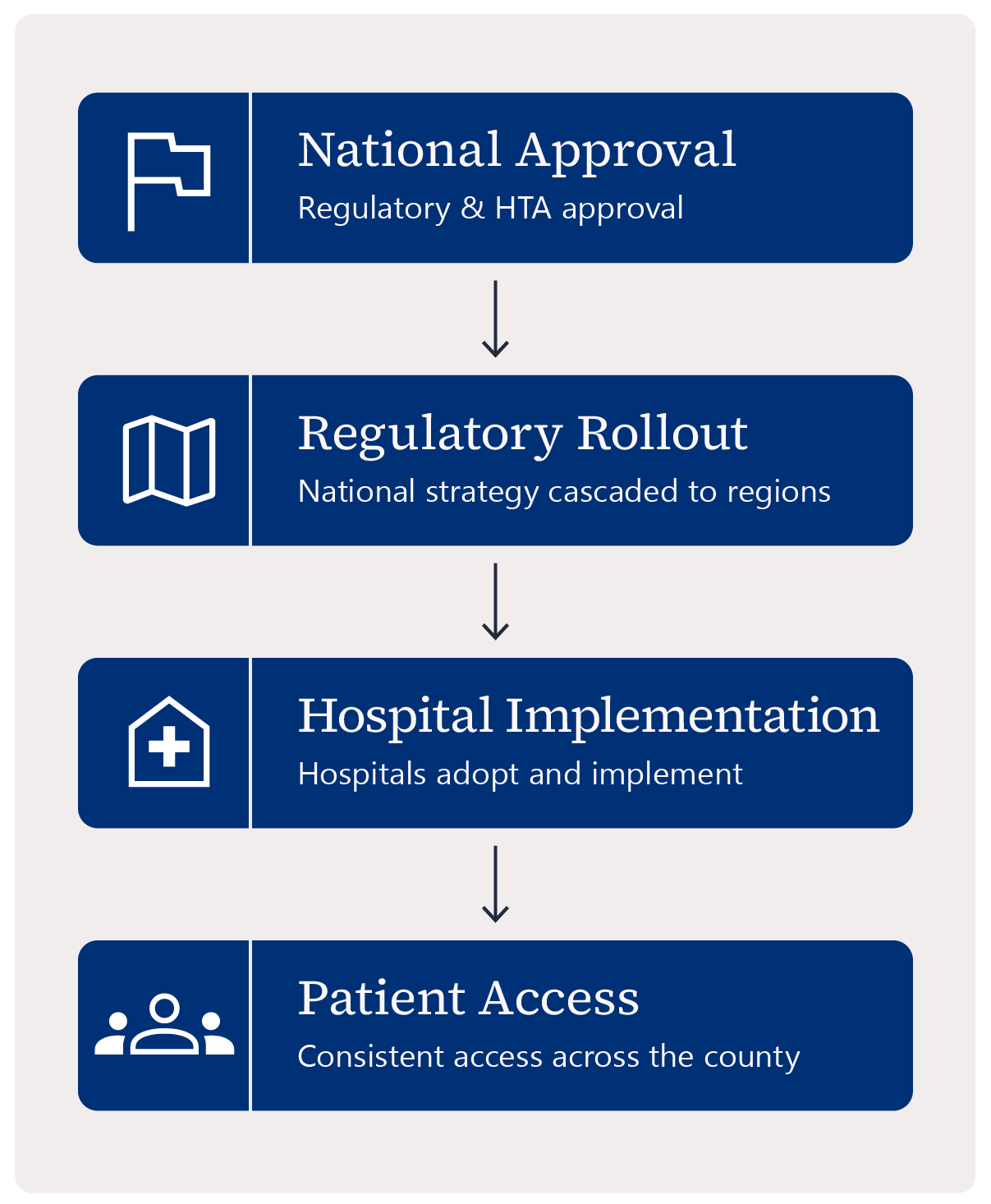
The implication is clear: commercial success now depends on a strong regional market access strategy, not just national excellence.
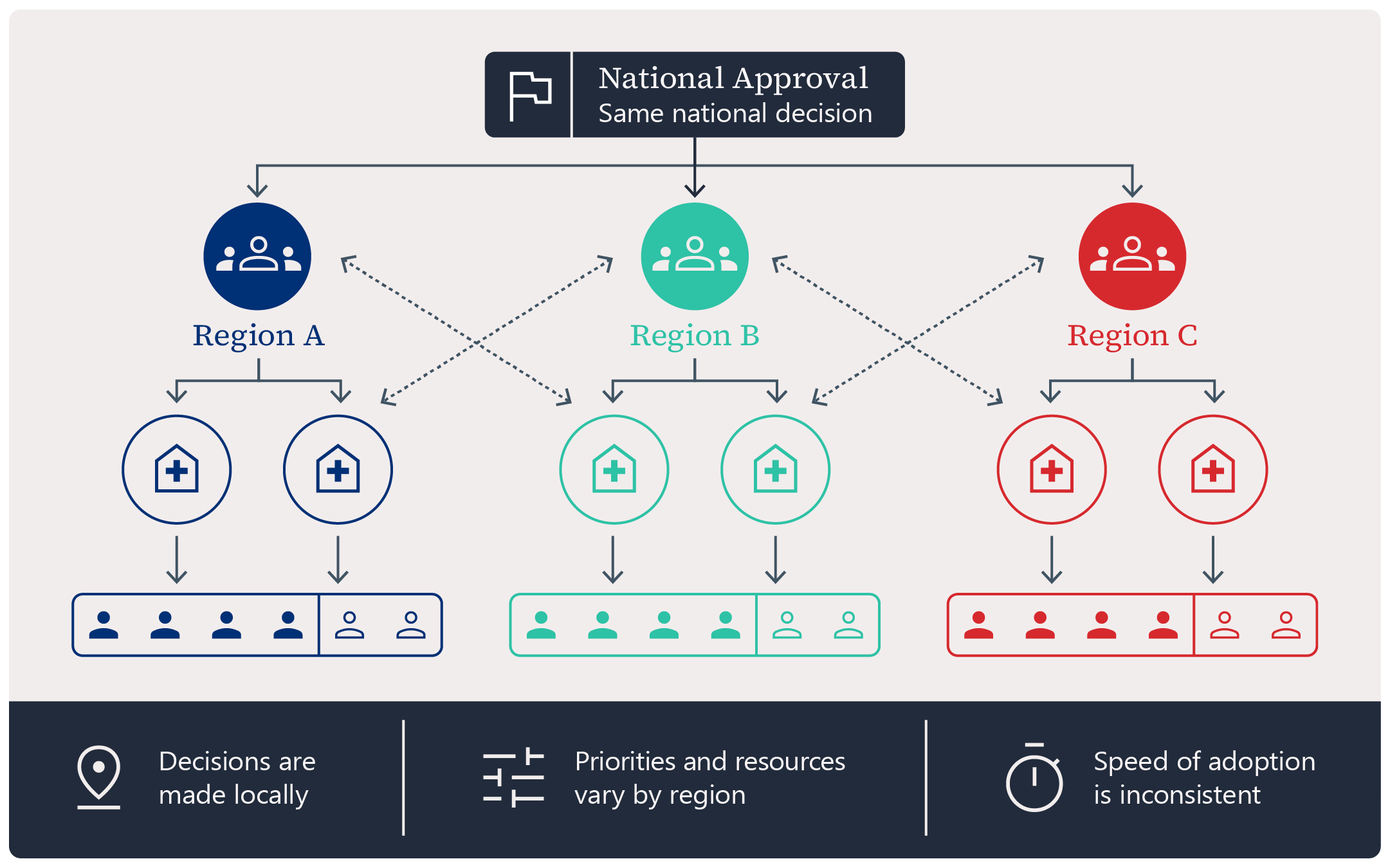
This is why regional pharma market access has become the defining capability for modern commercial teams. It is the layer where national strategy becomes real or fails.
The issue isn’t capability; it’s the operating model. Companies need a localized market access system, not a national plan with regional add-ons.

How to strengthen your Budget Impact Models
Learn how to structure, validate, and adapt BIMs to support payer discussions and consistent evidence communication across global markets.
This is the foundation of any credible regional market access strategy. Without it, companies are flying blind.
2. Influence & investment segmentation: moving beyond job titles
Traditional segmentation assumes that titles have equal power. Influence is distributed across roles, committees, and informal networks.
A modern approach focuses on:
- Influence: Who shapes decisions, even if they don’t sign them
- Decision power: Who controls budgets, protocols, and pathways
- Channel preference: How each stakeholder prefers to engage
- Implementation impact: Who can accelerate or block adoption
This creates a segmentation model based on action and output, not hierarchy. It also helps teams prioritize accounts and contacts where effort will generate the greatest return.
3. Local value activation: tailoring the story to regional priorities
National value messages rarely resonate at the regional level. Local decision-makers care about:
- Budget impact in their specific population
- Operational feasibility
- Pathway alignment
- Local outcomes and unmet need
- Real-world implementation challenges
Winning companies translate national value into regional pharma market access narratives that speak directly to regional priorities. They adapt evidence, tailor messages, and provide tools that help local stakeholders solve their own problems.
4. Execution excellence: empowering field teams to deliver impact
Even the best strategy fails without strong execution. Regional access requires coordinated action across medical, commercial, and market access teams.
High-performing organizations:
- Equip field teams with actionable evidence, not static decks
- Provide autonomy within a clear strategic framework
- Align cross-functional teams around shared regional objectives
- Track progress through adoption, implementation, and patient access, not just activity metrics
The 4 pillars of regional pharma market access: a connected approach to access across every region

Health system mapping
Understand the real decision pathways, stakeholders, budgets and local priorities

Influence & investment segmentation
Focus resources on the right stakeholders based on their influence and local decision power

Local value activation
Translate your value into local context, priorities and evidence that resonates

Execution excellence
Drive coordinated, measurable engagement and implementation for sustained uptake
Stronger locally with greater impact nationally
Local understanding * Targeted action * Better patient outcomes
Ready to drive access at a regional level?
Equip your teams to succeed at the regional and local level. See how Basecase helps you operationalize regional market access strategy, deliver localized value, and navigate subnational market access complexity with confidence.

Senior consultant and capability leader – Life Sciences
A senior consultant and capability leader in life sciences, Manoj has supported global, regional, and affiliate teams across international markets. His work spans biopharmaceutical companies, health system partners, and cross‑functional commercial, medical, and market access organizations. Manoj helps these teams translate strategy into execution through capability development, omnichannel training, strategic onboarding, and narrative design. He strengthens performance, accelerates adoption, and scales impact across diverse healthcare ecosystems by equipping teams with the skills, structures, and clarity needed to deliver consistent, real‑world results.
Make an inquiry
Ready to bring your value story to life? Make an inquiry to learn how BaseCase value communication software transforms complex economic models and clinical data into interactive, field-ready tools.

常见问题解答
Why is regional pharma market access more important than national approval today?
National approval no longer guarantees uptake because real-world decisions increasingly happen at the subnational level. Regional pharma market access determines how therapies are funded, adopted, and implemented across health systems. With growing decentralization, subnational market access dynamics, such as regional budgets and local decision pathways, directly influence how quickly and widely patients receive new treatments.
What makes an effective regional market access strategy in decentralized health systems?
A strong regional market access strategy goes beyond national planning by incorporating localized insights, stakeholder mapping, and tailored engagement. Success depends on aligning evidence and messaging with localized market access needs, including regional priorities, funding constraints, and clinical pathways. Companies that adapt strategies at this level are better positioned to drive consistent adoption across diverse healthcare systems. Read the blog to learn best practices for pharma commercialization in market access.
How does subnational market access impact drug adoption timelines?
Even after national approval, subnational market access processes, such as regional reviews, hospital formulary decisions, and funding approvals, can significantly delay adoption. A proactive regional pharma market access approach, supported by a clear regional market access strategy, helps anticipate these barriers and accelerate implementation by aligning with local requirements earlier in the launch process.
What are the biggest challenges in implementing regional pharma market access strategies?
Implementing regional pharma market access strategies is challenging due to fragmented decision-making, limited visibility into subnational market access pathways, and inconsistent stakeholder engagement. Many teams also struggle to transition from national plans to localized market access execution. Without a clear regional market access strategy and strong coordination across functions, companies risk delayed adoption and uneven access across regions.
How can pharma companies operationalize a regional market access strategy at scale?
To scale effectively, companies must build repeatable models that integrate regional market access strategy with localized market access execution. This includes investing in data, empowering field teams, and aligning functions around subnational market access realities. A mature approach combines both regional market access strategy planning and localized market access delivery to ensure consistent outcomes across regions and healthcare systems.
Platforms like Basecase can support this by equipping teams with tailored, region-specific insights and tools that translate strategy into action. By enabling more effective stakeholder engagement and consistent execution, they help bridge the gap between national planning and subnational market access delivery. Learn more about BaseCase value communication software here