


2026 年 6 月 9 日

How prepared is your organization for ICH M15?
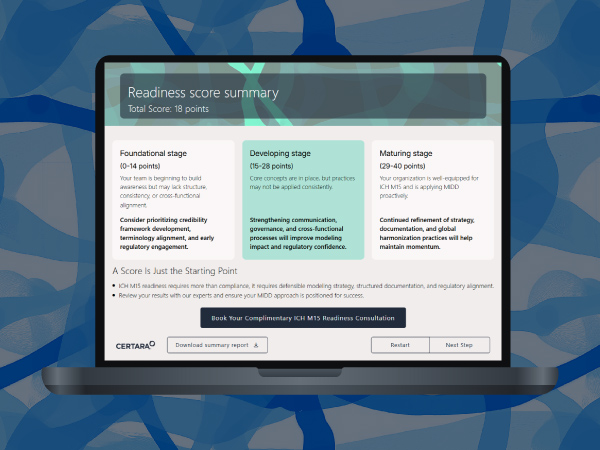
ICH M15 places greater emphasis on model credibility, context of use, and evidence integration. Assess your organization’s readiness and identify potential gaps with Certara’s interactive assessment tool.
Need support implementing Model-Informed Drug Development strategies?
From model credibility assessments and regulatory strategy to PBPK, QSP, Pharmacometrics, and integrated evidence generation, Certara helps organizations apply quantitative science across the drug development lifecycle.


Erika Brooks
Marketing Director, Quantitative Science ServicesWith over 22 years of experience in hospitals, health systems, associations, life sciences, physician practices, and suppliers, Erika is an experienced marketing strategist and supports the Quantitative Science Services offering with Go-to market planning and execution.

Eva Berglund, PhD
Vice President, Clinical Pharmacology and Regulatory StrategyDr. Eva Gil Berglund is a pharmacist by training and has a PhD in Clinical Pharmacology, both from Uppsala University, Sweden. She has been a Clinical Pharmacology reviewer at the Swedish Medical Products Agency for over 20 years and a Senior Expert for 12 years, working with all types of molecules in marketing applications, clinical trials and scientific advice procedures in the EMA Network of National agencies. Eva has been working in all therapeutic areas and has extensive knowledge in antivirals, antibiotics, CNS active drugs, oncology, rheumatology, inhalation products etc.
常见问题解答
What is ICH M15 and why is it important for drug development?
The ICH M15 model-informed drug development guidance is an international guideline that establishes the general principles for model-informed drug development final guideline 2026. It provides a framework for evaluating model credibility, defining context of use, and integrating quantitative evidence into regulatory and development decisions. The guidance supports greater global alignment in how model-informed evidence is assessed by health authorities.
How does ICH M15 change expectations for model credibility?
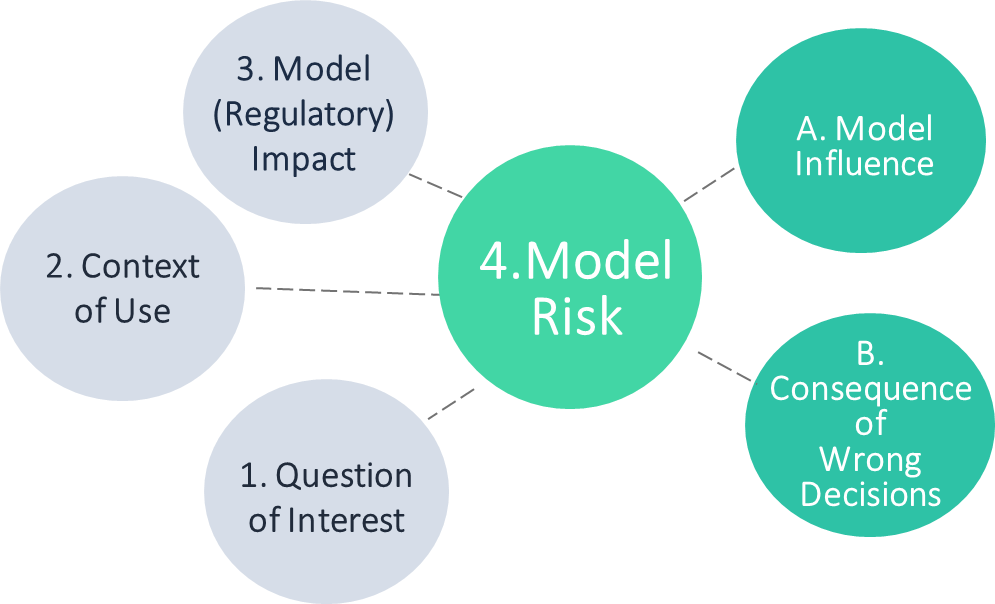
Rather than evaluating a model in isolation, ICH M15 emphasizes assessing model credibility based on the decision it is intended to support. Factors such as model influence, consequence of a wrong decision, uncertainty, and available supporting evidence all contribute to determining the appropriate level of validation and verification.
What types of modeling approaches are covered under Model-Informed Drug Development (MIDD)?
MIDD encompasses a range of quantitative methodologies, including Physiologically Based Pharmacokinetic (PBPK) modeling, Population PK/PD modeling, exposure-response analysis, Quantitative Systems Pharmacology (QSP), clinical trial simulation, translational modeling, and Model-Based Meta-Analysis (MBMA). These approaches are often used together to address complex development and regulatory questions.
How can organizations prepare for implementing ICH M15?
Organizations can prepare by establishing clear questions of interest, defining context of use early, developing transparent evidence generation strategies, and aligning quantitative science activities with clinical and regulatory objectives. Early planning helps ensure that model-informed evidence is fit for purpose and capable of supporting critical development decisions.
What role will MIDD play in the future of drug development?
As therapies become more complex and development timelines continue to compress, MIDD is expected to play an increasingly important role in decision-making. Rather than serving as standalone technical exercises, quantitative approaches are becoming integrated components of development strategy, helping organizations evaluate uncertainty, optimize study design, support regulatory interactions, and make more informed decisions throughout the drug development lifecycle.
How does ICH M15 impact PBPK, QSP, and other mechanistic modeling approaches?
ICH M15 does not prescribe a specific modeling methodology. Instead, it provides a framework for evaluating whether the evidence generated by a model is appropriate for its intended purpose. This creates opportunities for PBPK, QSP, MBMA, and other mechanistic approaches to play a larger role in supporting regulatory and development decisions when their context of use, credibility, and supporting evidence are clearly established.