


跳转到主要内容
搜索

2026 年 7 月 7 日

Noncompartmental analysis (NCA) is foundational to pharmacokinetic (PK) evaluation—but it’s also one of the most common sources of avoidable risk. Small inconsistencies in timing, missing concentration values, or unclear handling of exclusions can quietly propagate through an analysis, ultimately affecting key parameters and, in some cases, regulatory confidence.

At P21 Live at Certainty US in Boston in April, PHUSE Americas Director Shereen Khwajazada, also Director of Biometrics at Summit Analytical, explored how teams can use Pinnacle 21 (P21) not just as a compliance checkpoint, but as a proactive way to strengthen NCA workflows from the ground up.

What emerges is a shift in mindset: NCA quality isn’t something you validate at the end—it’s something you build into the process from the start.

Moving from validation to prevention

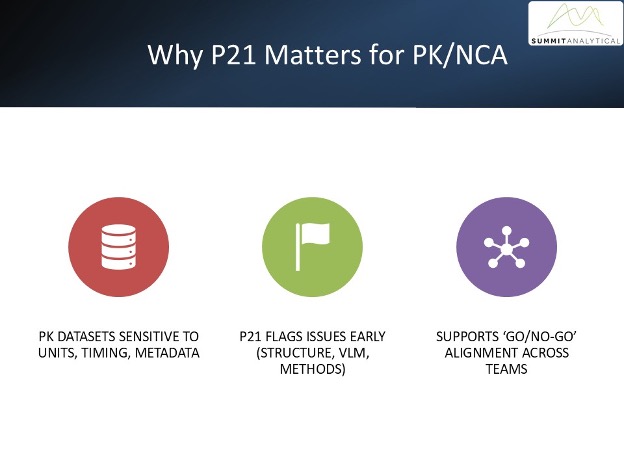
Pinnacle 21 is often introduced late, just before submission. At that stage, it functions as a gatekeeper, flagging issues that must be resolved quickly. But when used earlier, it becomes something more valuable: a mechanism for prevention.

By embedding P21 into ongoing workflows, teams can:

  • catch structural dataset issues before analysis begins
  • reduce rework and last-minute surprises

This shift from reactive validation to proactive quality control is one of the most effective ways to de-risk PK analyses.

Pinnacle 21 helps identify data issues early, enabling a more proactive approach to PK and NCA quality.
Strong data foundations drive everything that follows

Many downstream issues in NCA can be traced back to how datasets are structured at the outset. In particular, the relationship between ADPC and ADNCA datasets plays a central role.

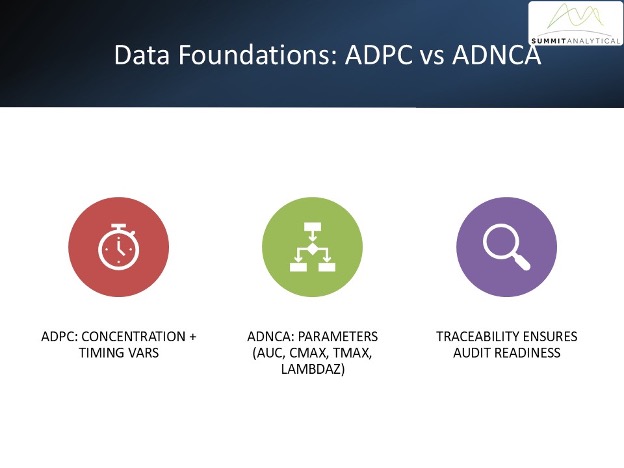
ADPC and ADNCA serve distinct roles in NCA, and clear alignment between them is essential for accurate and traceable PK results.
ADPC contains the concentration–time data, while ADNCA is tailored for parameter derivation. That distinction is straightforward—but in practice, inconsistencies in how these datasets are defined, aligned, or derived can introduce subtle errors that are difficult to detect later.

When the foundation is weak, problems tend to surface in predictable ways: timing mismatches, unclear derivations, or gaps in traceability. When it’s strong, validation becomes simpler, programming more consistent, and results more defensible.

Where complexity, and risk, creeps in

NCA workflows don’t usually fail because of a single major issue. More often, risk accumulates through a series of small, interconnected challenges.

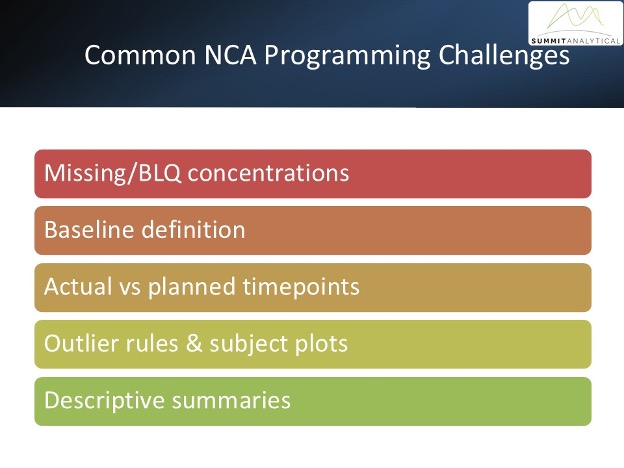
Common NCA programming challenges, from timing inconsistencies to missing values, can introduce risk if not addressed early.
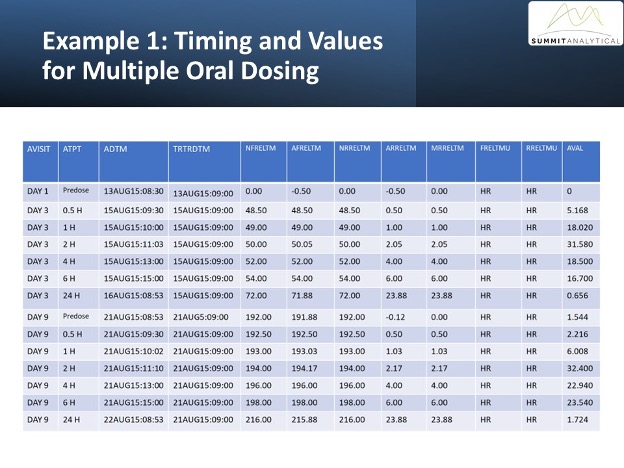
Timing is a good example. In multi-dose studies, aligning concentration data with dosing events requires careful handling of nominal versus actual time, as well as dose sequencing. Even minor inconsistencies here can distort key PK parameters like Cmax, Tmax, and AUC.

At the same time, decisions around data inclusion can introduce ambiguity. Missing concentration values or samples collected outside an acceptable time window are common, but how they’re handled makes all the difference.

Complex dosing and timing scenarios require careful alignment to ensure reliable NCA parameter calculation.
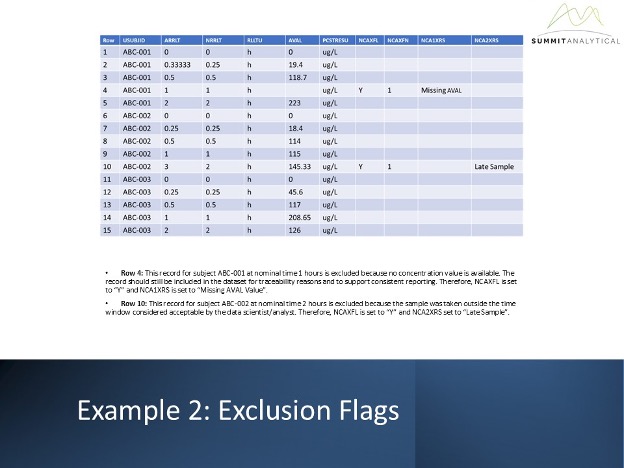
The most effective approach is simple but critical: preserve the data and make the decision visible.

Instead of removing records, they should be retained and flagged, with clear reasons documented (for example, missing values or late samples). This ensures that the dataset remains fully traceable and that analytical decisions are transparent to reviewers.

Flagging rather than deleting records preserves traceability and ensures transparency in NCA datasets.
Standardization, metadata, and the role of Define.xml

As datasets move toward analysis and submission, consistency becomes increasingly important, not just in the data itself, but in how it is described.

This is where Define.xml plays a central role. It serves as the bridge between raw data and interpretation, explaining how variables are derived, how exclusions are handled, and how analysis datasets are structured.

In NCA, value-level metadata is particularly important. It provides the context behind flags, derivations, and analysis-specific variables, ensuring that reviewers can understand not just what was done, but why.

Without this layer of clarity, even technically correct datasets can become difficult to interpret, increasing the likelihood of questions or delays.

Building repeatable, low-risk workflows

Tools like Pinnacle 21 Enterprise are most effective when they’re part of a broader, well-defined process. High-performing teams tend to rely on a combination of standardized programming practices, embedded quality control, and clear governance.

In practice, that often includes:

  • consistent derivation logic across studies
  • reusable programming patterns
  • QC checks integrated throughout the workflow
  • clear ownership of datasets and validation steps

When these elements are in place, validation findings become less frequent—and easier to resolve when they do occur.

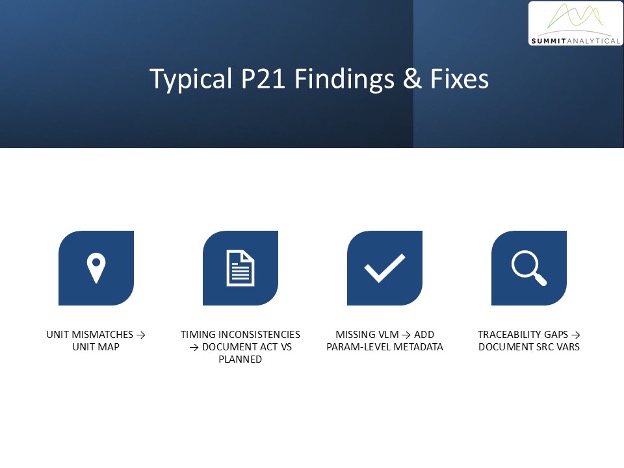
Pinnacle 21 findings highlight opportunities to standardize datasets and improve overall data quality.

From risk to reliability: key takeaways

De-risking NCA isn’t about adding more steps, it’s about making the right ones more consistent and transparent.

A few principles stand out:

  • use Pinnacle 21 early, not just at submission
  • ensure clear structure and alignment between ADPC and ADNCA
  • retain and flag records rather than deleting them
  • invest in strong metadata, especially in Define.xml
  • embed validation and QC into everyday workflows

Taken together, these practices turn NCA from a potential weak point into a well-controlled, reliable component of PK analysis; one that stands up to both internal scrutiny and regulatory review.

Wendy Young

Content Strategist

Wendy Young is a strategic content leader specializing in UX writing, product content strategy, and customer education for SaaS organizations. She helps companies bridge the gap between complex technology and exceptional user experiences by developing content frameworks that drive product adoption, strengthen brand consistency, and support business growth. Collaborating across product, engineering, design, marketing, and customer success, Wendy builds scalable content strategies that enable users to get the most from the products they use.

沪ICP备2022021526号

Powered by Translations.com GlobalLink Web Software